
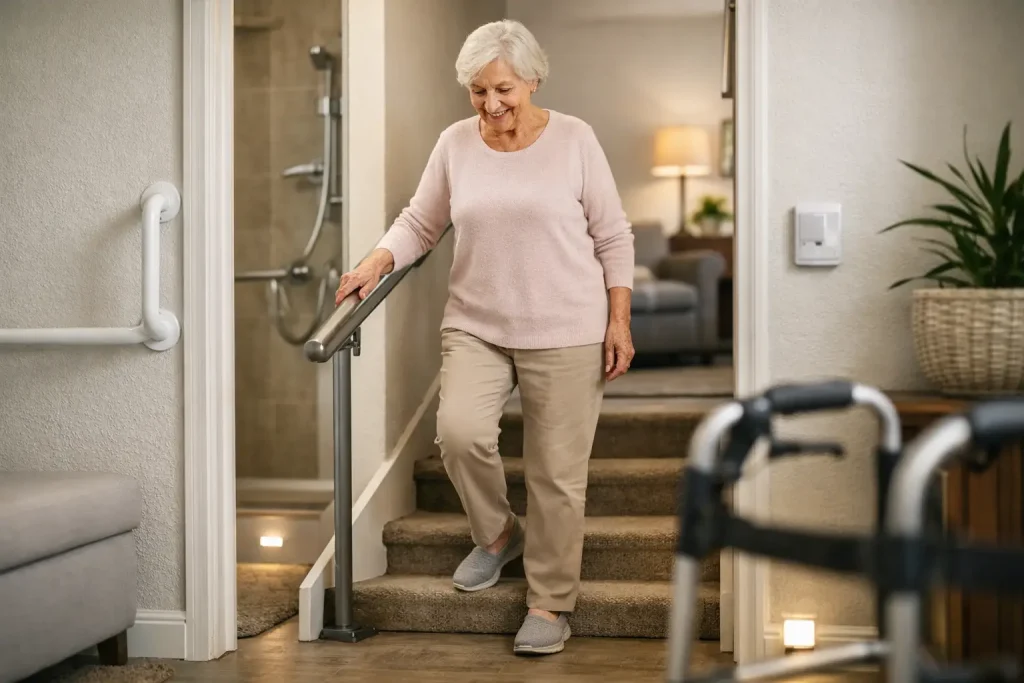
A loose hallway rug, a dim path to the bathroom, or medications stored in several places can turn an ordinary day into a worrying one. Senior home safety is not about making a home feel clinical or taking away a person’s choices. It is about removing unnecessary risks so they can continue living in familiar surroundings with confidence, comfort, and dignity.
The best safety plans are personal. A solution that helps one person may be inconvenient or unwanted for another. Start by noticing where daily routines feel difficult, tiring, or rushed, then make changes that support the person’s own goals.
Start With the Routines That Matter Most
A home safety check is most useful when it follows real life. Walk through a typical day: getting out of bed, preparing breakfast, showering, taking medications, answering the door, doing laundry, and moving around after dark. Ask the person what feels easy, what they avoid, and where they would welcome help.
Falls deserve close attention because they can affect confidence as well as physical health. But safety is broader than falls. It also includes preventing burns, missed medications, infections, isolation, confusion, and stress during a health change.
Look for changes in habits that may signal a need for extra support. These can include unopened mail, food left unused, wearing the same clothes repeatedly, bruises with no clear explanation, missed appointments, or reluctance to leave the house. These signs do not automatically mean someone can no longer live independently. They may mean the home setup or level of support needs to change.
Make Walking Paths Clear and Well Lit
Many hazards are small enough to be overlooked by someone who knows the home well. Clear walkways through bedrooms, hallways, and living areas of cords, footstools, low tables, pet toys, and piles of laundry. Secure or remove rugs that slide, curl at the edges, or create a change in floor level.
Lighting is one of the simplest improvements. Place easy-to-reach lamps near favorite chairs and beds, use nightlights between the bedroom and bathroom, and make sure switches can be reached without crossing a dark room. Brighter bulbs may help, but glare can be uncomfortable for some people. Even, soft lighting is often a better choice.
Outside, check paths, steps, driveways, and entrances. Repair uneven surfaces where possible, trim plants that block the way, and ensure handrails are secure. A motion-sensor light near the entry can be reassuring for someone returning home in the evening.
Footwear matters, too. Supportive, well-fitting shoes with non-slip soles are generally safer than loose slippers, socks on smooth floors, or shoes with worn-down tread. If balance has changed, a physical therapist or other qualified clinician can advise whether a cane, walker, or different mobility aid is appropriate. The right aid should make movement safer, not become another obstacle.
Create a Safer Bathroom and Kitchen
Bathrooms combine hard surfaces, water, and movements that require balance. A non-slip mat, a stable shower chair, a handheld shower head, and professionally fitted grab bars can make personal care less demanding. Towel rails and soap holders are not designed to hold body weight, so they should never be used as makeshift grab bars.
Consider whether the person can step safely into the shower or bathtub. A small threshold may be manageable for one person and a significant trip risk for another. There is no single answer: adaptations should reflect mobility, strength, privacy preferences, and the layout of the home.
In the kitchen, keep everyday items between waist and shoulder height to reduce bending, stretching, and climbing. Replace unstable step stools with safer storage arrangements. Check that appliance cords are in good condition and pan handles are turned inward while cooking. For someone living with memory changes, an automatic shutoff device, a simple meal routine, or support with cooking may offer more protection than reminders alone.
Support Medication Safety Without Taking Over
Medication routines can become complicated when prescriptions change after a hospital visit or when several doctors are involved. Keep an up-to-date medication list that includes prescription medicines, over-the-counter products, vitamins, and supplements. Bring it to appointments and ask a pharmacist or health professional to review it regularly.
A pill organizer, labeled storage area, or reminder alarm can be helpful when a person is comfortable using it. However, these tools are not right for everyone. If doses are being missed, repeated, or causing confusion, more direct support may be needed. A nurse or trained caregiver can help organize medication routines within the appropriate care arrangements and watch for concerns that should be raised with a clinician.
Store medications safely, away from heat, moisture, children, and visitors who should not have access. Avoid keeping old medications “just in case.” Clear systems reduce the chance of an error and make it easier for family members to assist when needed.
Plan for Emergencies Before One Happens
An emergency plan should be simple enough to use on a stressful day. Keep important phone numbers visible and save them in the phone. Include a trusted family member, neighbor, doctor, pharmacy, and emergency contact. Make sure the house number is easy to see from the street.
A personal alarm or wearable emergency call device may provide reassurance, particularly for a person who spends time alone or has a history of falls. Its value depends on whether it is worn consistently, charged, and connected to a reliable response plan. A device is useful, but regular human contact remains just as valuable.
Prepare a small folder or clearly marked place for key health information, identification, advance care preferences if applicable, and a list of medications. If the person uses oxygen, mobility equipment, or electrically powered medical devices, discuss a plan for power outages with their care team and utility provider.
Senior Home Safety Includes Connection
A safer home is not only one with fewer trip hazards. Loneliness, grief, depression, and cognitive changes can affect appetite, sleep, decision-making, and willingness to seek help. Regular calls, visits, rides to appointments, shared meals, and support to join community activities all contribute to well-being.
Families sometimes hesitate to raise safety concerns because they fear upsetting a loved one. A respectful conversation usually works better than a list of instructions. Try asking, “What would make this easier for you?” or “Would you like another pair of hands with that?” This keeps the person at the center of the decision.
Support can be arranged gradually. Someone may only need help with housekeeping, transportation, or a weekly check-in at first. Others may need personal care, nursing oversight, or assistance after returning home from hospital. Needs can change, and a good care plan changes with them.
When to Ask for Professional Support
It is wise to seek an assessment after a fall, a hospital stay, a new diagnosis, a noticeable decline in mobility, or increasing difficulty with daily tasks. Professional input can identify risks that are hard for families to see, including medication side effects, poor balance, skin concerns, or changes in cognition.
Nurse-led in-home support can be especially helpful where health needs and everyday routines overlap. At Koala Home Care, individualized support is built around what each client wants to keep doing, whether that means maintaining a personal routine, getting safely to appointments, or continuing to participate in the community.
Safety should never feel like a loss of home. With thoughtful adjustments, honest conversations, and support that respects personal choices, home can remain the place where independence is protected and everyday life still feels like their own.