
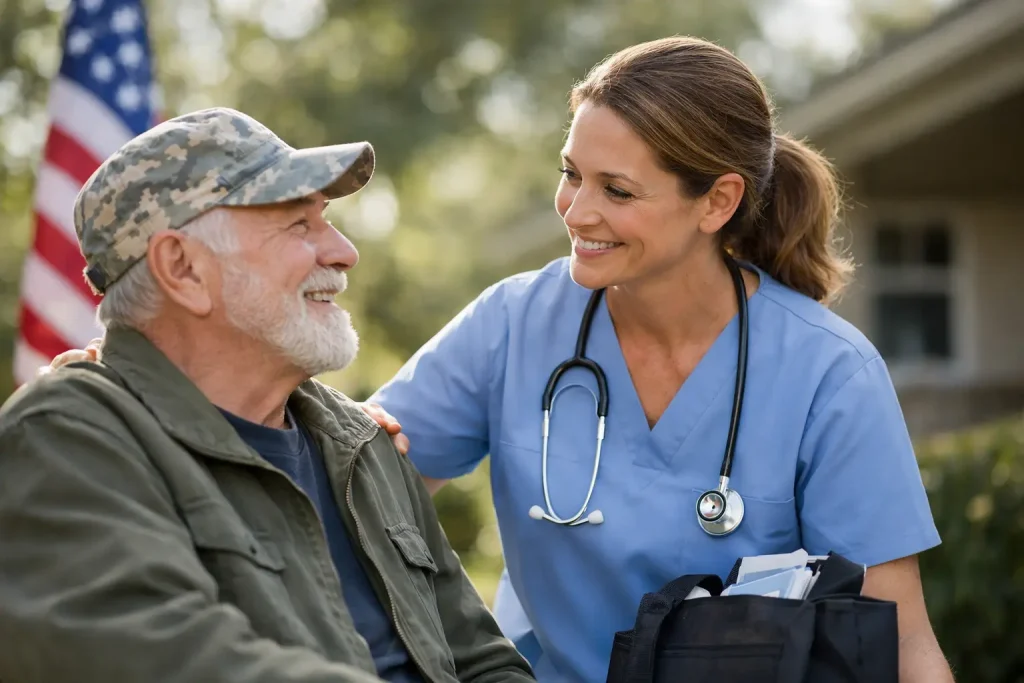
For many veterans, staying at home is not simply a matter of comfort. It protects familiar routines, personal independence, connection to community, and the dignity of making choices about each day. DVA community nursing services can make that possible when health needs become harder to manage alone, bringing qualified clinical care into the place a person knows best.
Community nursing is not about taking over. At its best, it is practical, respectful support that works around the veteran’s preferences, health goals, and existing care arrangements. It can also give family members and carers greater confidence that important health needs are being monitored by an experienced professional.
What DVA community nursing services may include
DVA community nursing services are home-based nursing supports for eligible veteran card holders whose health needs require clinical care outside a hospital or doctor’s office. The precise services available depend on an individual’s assessed needs, their DVA eligibility, and the authorization process in place.
A community nurse may assist with wound care, medication management, continence support, catheter care, diabetes monitoring, pain and symptom observation, or care following surgery or a hospital stay. Nurses can also help identify changes that need follow-up, communicate with a treating doctor or other health professionals, and support a safer recovery at home.
The value often lies in the small details. A wound dressing needs to be completed correctly and on schedule. A new medication may be causing dizziness. Reduced appetite, fatigue, confusion, or swelling may be an early sign that something has changed. Having a nurse who knows what to look for can help address concerns before they become a crisis.
For some people, nursing visits are short-term, such as after discharge from hospital. For others, ongoing clinical support may be needed because of a chronic condition, frailty, mobility limitations, or more complex care requirements. The right arrangement should reflect the person, not force the person to fit a standard schedule.
Care that supports independence, not just health tasks
Clinical support matters, but a person’s wellbeing is bigger than a treatment plan. A veteran may be managing a health condition while also needing help to shower safely, prepare meals, attend appointments, keep the home manageable, or remain socially connected. These needs often sit alongside one another.
That is why nursing care can be most effective when it is coordinated with practical in-home support. A nurse may notice that a client is struggling to reach the bathroom safely, remember medication times, or manage stairs after an injury. With the client’s agreement, these observations can inform a broader support plan that helps daily life feel more manageable.
This does not mean every veteran needs multiple services. Some people only need a nurse for a specific clinical task. Others benefit from a combination of nursing, personal care, transport, companionship, or household assistance. The appropriate level of care depends on health needs, goals, informal support from family or friends, and what the individual wants to continue doing for themselves.
A respectful provider will ask these questions rather than assume the answers. Independence can mean different things to different people: preparing one’s own breakfast, maintaining a garden, attending a regular social group, or simply deciding who enters the home and when.
When it may be time to arrange community nursing
Families often begin looking for help after a clear event, such as a hospital admission, a fall, surgery, or a new diagnosis. Yet the need can develop gradually. A spouse may be taking on more clinical tasks than they feel comfortable with. Dressings may be difficult to manage. Medication routines may be becoming confusing. A person may be avoiding medical appointments because leaving home feels exhausting or unsafe.
It can be helpful to seek advice before the situation becomes urgent. Early support may reduce stress, prevent avoidable complications, and make a transition home from hospital less overwhelming. It also gives the veteran time to be involved in decisions about the care they receive.
Signs that a nursing assessment may be useful include ongoing wounds, frequent changes in health, increasing difficulty managing medications, a recent decline in mobility, continence concerns, or a need for clinical monitoring after discharge. These signs do not automatically mean a person cannot remain at home. Often, the right support is what helps them stay there safely.
How the process usually works
Access to DVA-funded community nursing generally involves confirming the veteran’s eligibility and arranging an assessment or referral through the appropriate health professional and DVA pathway. Requirements can vary based on the veteran’s card type, clinical needs, and the service being requested, so it is wise not to rely on assumptions.
The first conversation should focus on what is happening at home. A provider or health professional may ask about diagnoses, medications, recent hospital care, mobility, current supports, and the tasks that are becoming difficult. Just as importantly, they should ask what matters to the veteran. This could be recovering enough strength to attend a family event, remaining at home with a partner, or getting support without losing privacy.
From there, a care plan can set out the nursing tasks, visit frequency, safety considerations, and communication arrangements. Plans should be reviewed when needs change. A service that suited someone three months ago may need adjustment after a fall, a new treatment, or improvement in their condition.
Clear communication is especially important when several people are involved. The veteran should know who is providing care, what each visit is for, how concerns are escalated, and who to contact if a scheduled service cannot go ahead. Family members can be included where appropriate and with the veteran’s consent, but the veteran’s voice should remain central.
Choosing a nursing provider with confidence
Not all in-home care is the same. When a veteran requires clinical support, it is reasonable to ask direct questions about nursing qualifications, experience with complex care, availability, supervision, and how the provider communicates with doctors and families.
Consistency also matters. Seeing familiar care professionals can build trust and make it easier for a nurse to recognize subtle changes over time. At the same time, no provider can promise that the exact same person will always be available. What matters is having a reliable team, thoughtful handovers, and care records that prevent a client from having to repeat their story at every visit.
For veterans in Melville and surrounding Perth communities, a local, nurse-led provider can offer the reassurance of care that understands both clinical responsibilities and the realities of everyday life at home. Koala Home Care approaches each plan as a partnership, with compassionate support shaped around the individual’s routines, choices, and goals.
It is also worth asking how urgent changes are handled. Health needs do not always follow business hours. A provider should be transparent about after-hours arrangements, when to call the care team, and when a concern requires a doctor, urgent care, or emergency services.
A home should still feel like home
Receiving nursing care does not change a veteran’s right to privacy, respect, and control over their own life. The most meaningful support is often quiet and dependable: a nurse who explains what they are doing, listens without rushing, preserves modesty during personal care, and takes concerns seriously.
For families, community nursing can ease the pressure of trying to become a clinician while still allowing them to remain a daughter, son, partner, or friend. For veterans, it can create room to focus on living, not only managing health tasks.
The right care begins with a simple question: what would make home feel safer and more manageable while preserving the life this person values? When that question guides the plan, nursing support can be both clinically sound and deeply personal.